Relationship
Independent, but complementary
AEG can govern actions without SHIELD. SHIELD can establish confidence without AEG. When used together, SHIELD may contribute evidence to a decision that AEG independently governs. Neither model inherits authority or validity from the other.
Choose where to start
Which boundary are you designing?
Each model has its own scope, evidence, versions, and adoption path.
AEGCanonical specification · v1.1
What should the system be allowed to do?
The Agentic–Event–Governed Architecture Model separates autonomous intelligence from execution authority through structured intent, observable coordination, and independent runtime governance.
- Boundary
- Generated intent → authorized execution
- Use when
- AI or agents can cause consequential external effects
- Current maturity
- Specification, technical paper, practical kit, diagrams, and public implementation
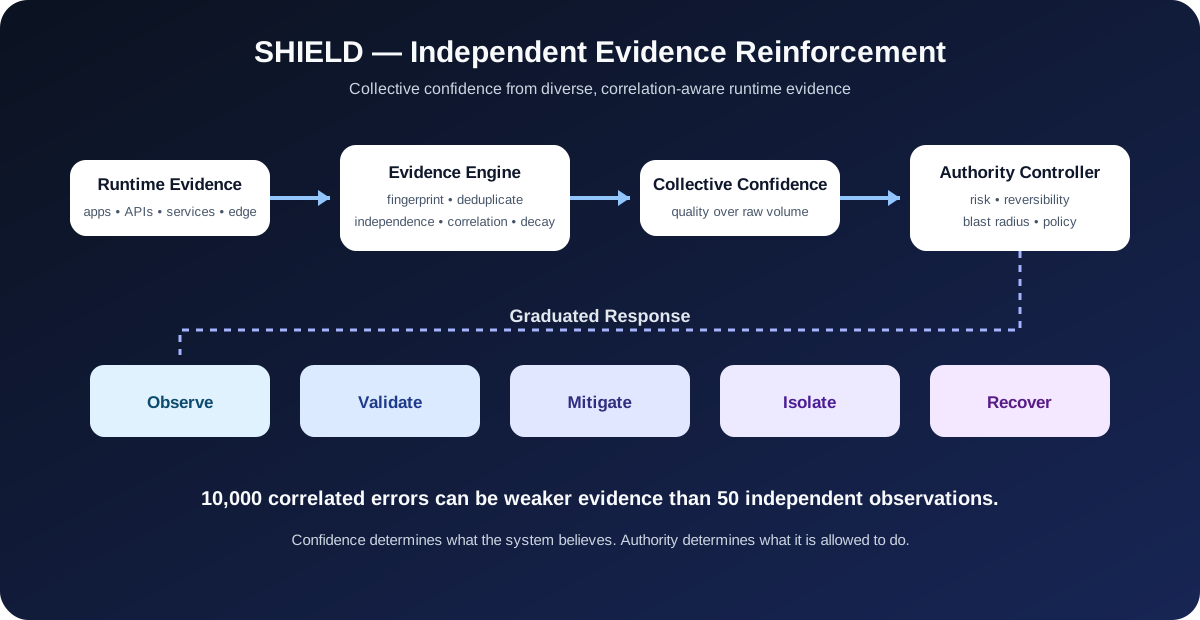
SHIELDResearch model · v1.0
What should the system have enough evidence to believe?
SHIELD explores Independent Evidence Reinforcement: building confidence from diverse, genuinely independent observations before progressively stronger remediation is justified.
- Boundary
- Distributed observation → collective confidence
- Use when
- Repeated or correlated signals may be mistaken for independent evidence
- Current maturity
- Canonical model and diagram; public validation remains in progress
A consistent model journey
From idea to inspectable architecture
Flagship models are developed through the same four practitioner stages.
01Understand
Start with the problem, central principle, scope, and canonical definition.
02Evaluate
Use applicability guidance, review questions, and known failure modes.
03Apply
Follow worked examples, implementation patterns, diagrams, and public code.
04Verify
Inspect evidence, limitations, version history, and unresolved questions.
Public artifacts
Follow the work from model to implementation