A change is proposed
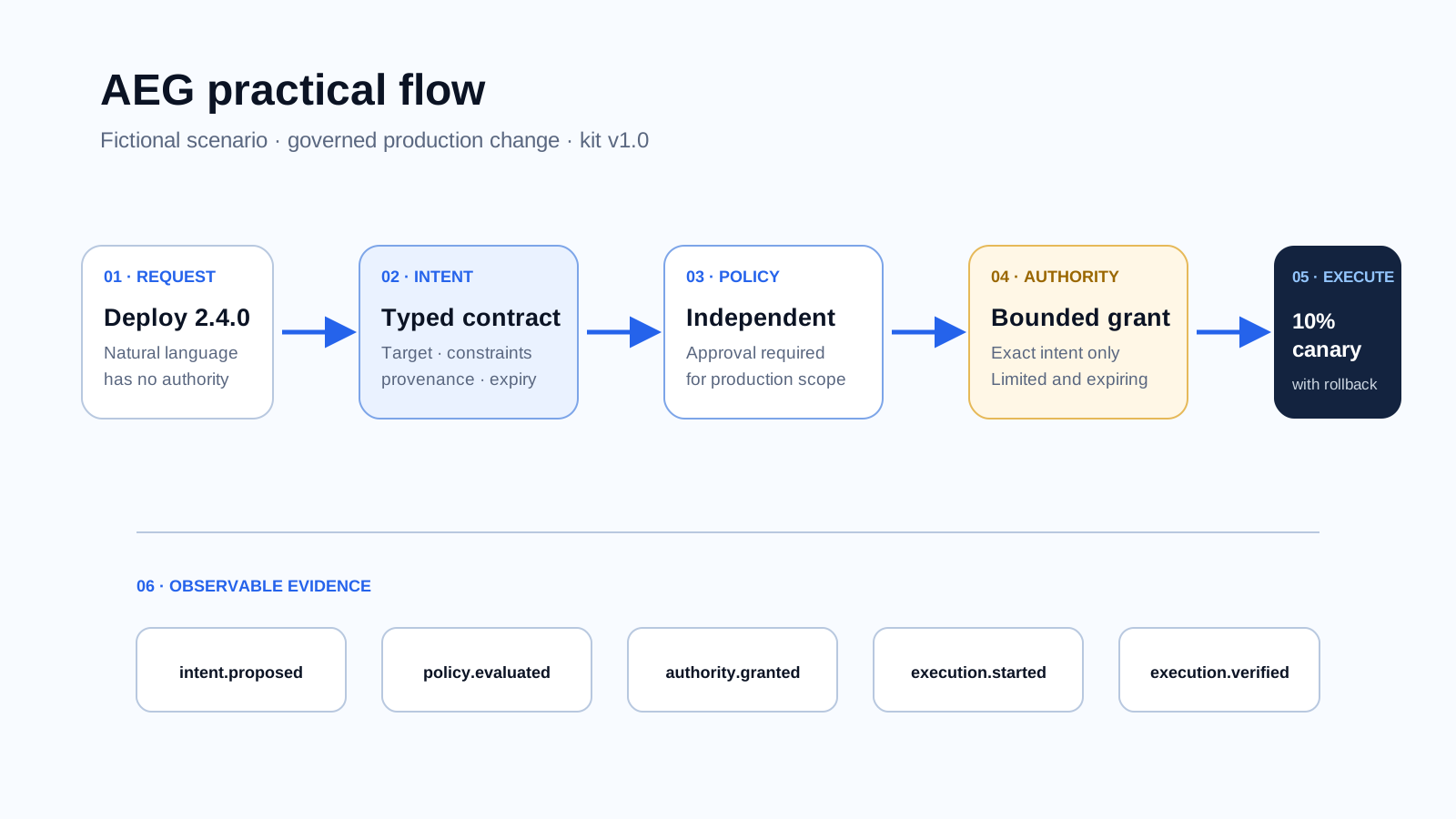
An operator asks to deploy Lumen Notes 2.4.0 to production using a 10% canary.
AEG Practical Model Kit · v1.0
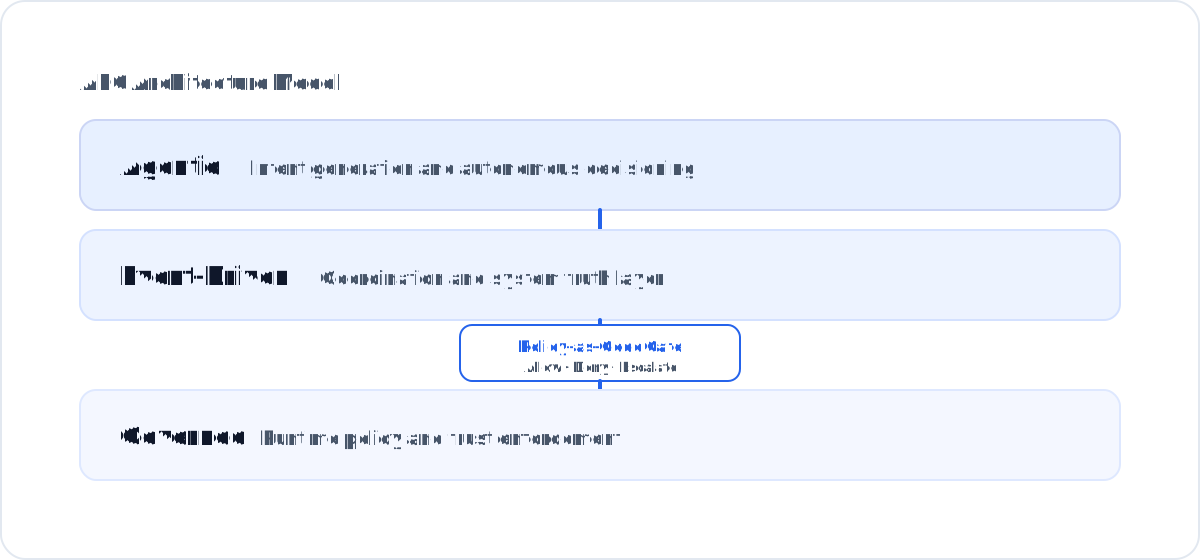
A worked, inspectable application of the Agentic–Event–Governed Architecture Model using one entirely fictional system.
Worked example
An operator asks an AI-assisted release coordinator to deploy version 2.4.0 of the fictional Lumen Notes API. The release includes a schema backfill, so proposing the change and authorizing it must remain separate acts.
An operator asks to deploy Lumen Notes 2.4.0 to production using a 10% canary.
The request is normalized into a typed, immutable intent before any executor receives it.
Production scope and a schema backfill trigger a rule requiring human approval.
The approval is bound to this release, environment, canary size, expiry, and rollback condition.
The executor can act only from the authorized intent—not from the original natural-language request.
Outcome events make the request, policy decision, approval, execution, and verification reconstructable.
Structured intent
The exact schema is illustrative. The invariant is that meaning, scope, constraints, provenance, and expiry become independently inspectable before authority is considered.
{
  "intentId": "int_lumen_240_001",
  "type": "release.deploy",
  "target": {
    "service": "lumen-notes-api",
    "environment": "production",
    "version": "2.4.0"
  },
  "constraints": {
    "canaryPercent": 10,
    "includesSchemaBackfill": true,
    "rollbackWhen": "errorRate > 2% for 5m"
  },
  "requestedBy": "operator_17",
  "expiresAt": "2026-09-01T18:00:00Z"
}
Policy evaluation
An independent governance component evaluates the normalized intent and returns a decision—not an execution command.
The system may prepare the change, but no execution authority exists until an independent reviewer approves this exact intent.
Event evidence
Each transition emits evidence under the same intent identifier. Model-generated explanations may provide context, but they are not the authoritative audit record.
Evaluation checklist
This is a design-review aid, not a certification score. A checked item should point to inspectable architecture evidence.
Reusable artifacts
The downloadable artifacts are intentionally vendor-neutral and may be adapted with attribution under CC BY 4.0.
Assumptions and limitations
AEG defines separation of responsibilities and decision boundaries. It does not prescribe an identity provider, policy engine, event broker, or deployment platform.
A structurally independent policy can still be incomplete or wrong. Policy quality, testing, ownership, and change control remain separate obligations.
Low-impact, reversible automation may not justify the operational cost of the full pattern. Apply controls in proportion to consequence.
Privacy, security, legal, safety, and domain-specific requirements must still be designed and verified independently.
Version history
Initial practitioner release: fictional production-change example, structured intent, policy decision, event trail, interactive checklist, reusable artifacts, and explicit limitations.
Challenge the model
Useful feedback identifies the exact boundary, rule, or failure mode that needs clarification. Public implementation examples must contain only material you are authorized to share.